

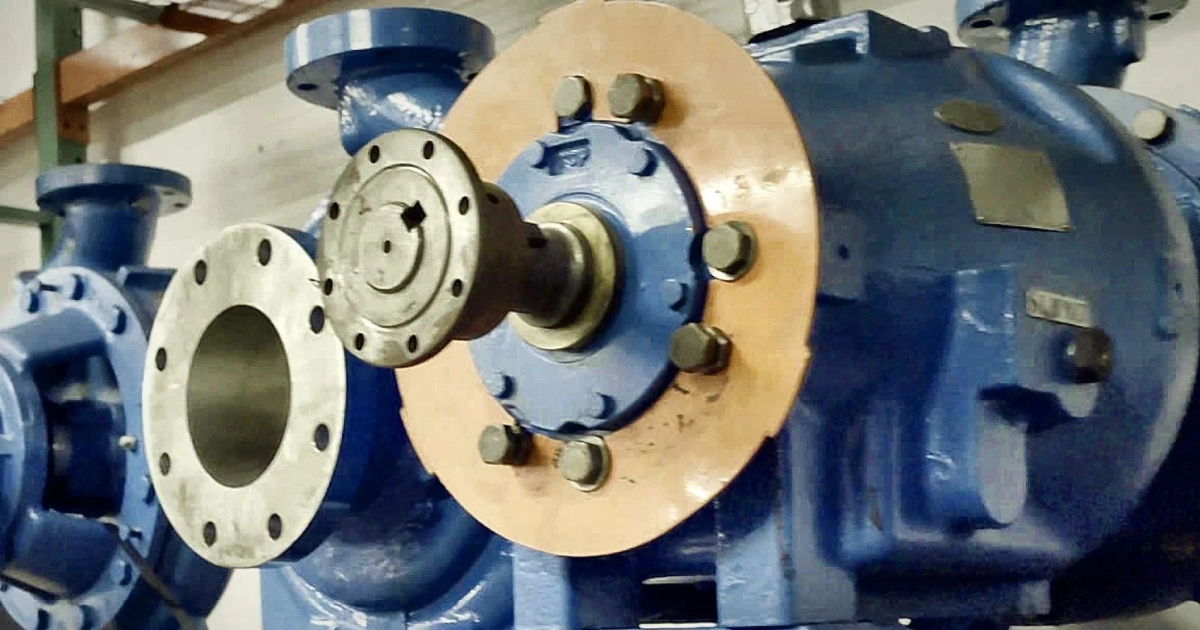
A pump failure hands you three questions at once: how fast you need it back, what you can spend, and what happens if the replacement fails early. Getting those three questions straight (criticality, downtime cost, and horizon) decides whether a new build, a rebuilt unit, or an inspected in stock pump is the right call. Here's how to work through it before the pressure of the outage makes the decision for you.
Why the Decision Matters
Choosing the wrong replacement route has real costs:
- Overpaying for speed you didn't need. New manufacture built for a process that's being retired next year ties up capital you didn't need to spend.
- Underpaying for a critical application. An unverified used pump in a service with no installed spare turns a quick fix into a repeat failure.
- Missing the obsolescence trap. Assuming "new" is always available can stall a replacement for months if your model's been discontinued.
Working through the framework below gets you to the right answer faster than defaulting to habit or brand loyalty.
Step 1: Assess Criticality
Is this pump feeding a redundant loop with an installed spare, or is it the single unit carrying your whole process? Criticality determines how much verification and warranty coverage you should demand before it ships.
Step 2: Put a Number on Downtime
What does a day of downtime actually cost you? If lost production dwarfs the price difference between your options, speed wins and purchase price becomes a rounding error. If the line's down for planned maintenance anyway, you have room to optimize for cost instead.
Step 3: Consider the Horizon
How long will this process run? A pump replacing a unit on a ten year process justifies a different investment than a bridge unit for a line being retired next year.
When Each Option Makes Sense
New Build
Best for critical duty with no installed spare, or service where an early failure cascades into real damage. You get current production parts availability, a full factory warranty, and a service life that starts at zero. The usual objection is lead time, but that's not universal. We supply new Webtrol pumps built to order in 3 to 5 days, putting new manufacture inside a delivery window most buyers assume only used equipment can hit. Before ruling out new on schedule grounds, ask what the actual build time is for your configuration.
Rebuilt
A rebuilt pump is not a used pump. It's stripped, restored to spec with new wear components, bearings, and seals, and tested before it ships. Rebuilt wins in two situations: cost sensitive duty on a known good design, where you get restored performance at a discount to new; and obsolescence, when the OEM has discontinued your model and rebuilding the same unit is the only way to keep an exact fit in place.
Inspected In Stock Used
The speed play. It exists, it's been checked, and it ships now. This is the right call when downtime is the dominant cost and a unit on the shelf matches your spec. The key word is inspected: a used pump with documented shaft runout checks, bearing evaluation, and casing examination is a legitimate long term choice. A unit with no history is a bridge, fine to get you through the outage, but plan its replacement.
Quick Reference
| Situation | Best Route | Why |
|---|---|---|
| Critical duty, no spare, long horizon | New | Full warranty, parts availability, zero hour service life |
| Critical duty but tight schedule | New quick build (e.g. Webtrol, 3 to 5 days) | New unit assurance inside a used unit timeline |
| Obsolete model, exact fit required | Rebuilt | Restored to spec and tested, same footprint |
| Budget driven, known design | Rebuilt | Spec performance at a discount to new |
| Line down now, downtime dominates | Inspected in stock used | Fastest restart, lowest cost |
| Bridge unit for a retiring process | In stock used | Matches investment to remaining life |
Frequently Asked Questions
Is a rebuilt pump the same as a used pump? No. A used pump is sold as is. A rebuilt pump has been stripped, had wear components and bearings replaced, restored to spec, and tested before it ships, with documentation to prove it.
How do I know if a used pump is safe to run long term? Look for documented inspection: shaft runout checked, bearings evaluated, casing examined, and ideally a test run. A unit with no inspection history should be treated as a bridge, not a permanent fix.
What if the OEM has discontinued my pump model? Rebuilding your existing unit, or a donor unit of the same model, is often the only way to keep an exact footprint in place while you plan a longer term migration to a current model.
Is new manufacture really faster than people assume? For many configured pumps, lead time is a real concern. But not always. We build new Webtrol pumps in 3 to 5 days, which is inside the window most buyers assume only used equipment can hit.
Have a pump down and need the new, rebuilt, and in stock options priced side by side? Send us the nameplate data and your operating conditions through our quote request form, and we'll come back with lead time and price on each, so the decision is a comparison, not a guess.


