

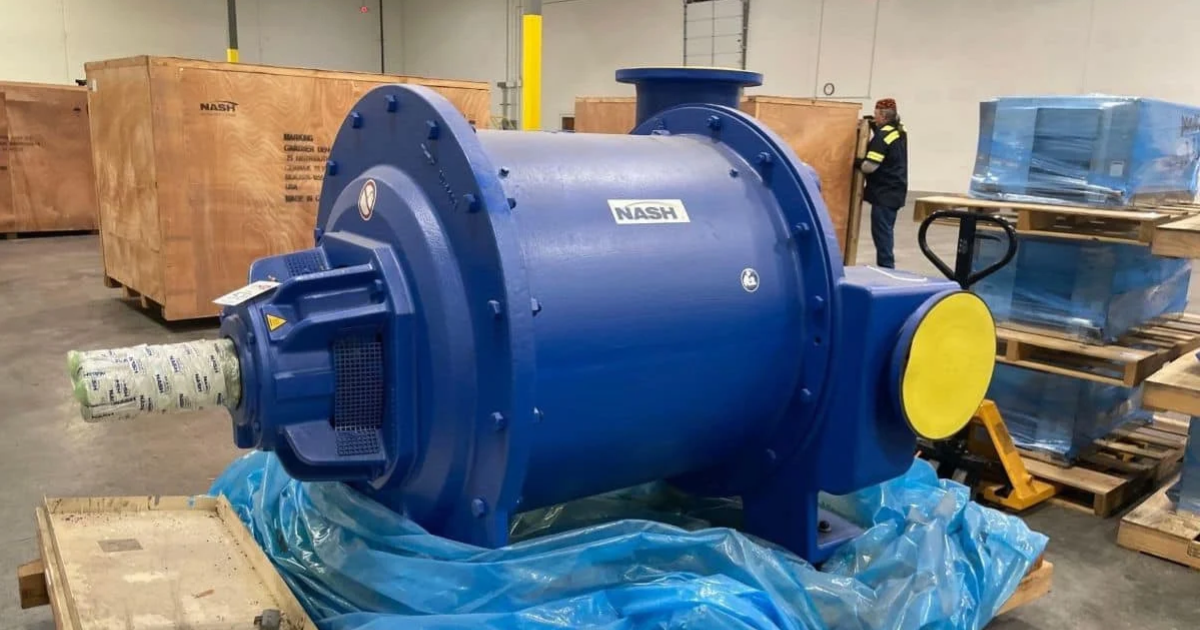
The cost of downtime in manufacturing isn't a line item. It's lost production, idle labor, missed shipments, and in some plants, product scrap, or spoilage stacked on top of each other. When a pump, motor, or gear drive fails without warning, the real number is almost always bigger than whatever's on the repair invoice. Putting an actual $/day figure on your outage is the single fastest way to decide whether you grab something off the shelf tonight, order a fast-build unit, or wait on OEM lead time.
We field this call weekly: a plant manager with a dead pump, a production schedule on fire, and three options that all sound reasonable until you run the math. This article walks through how to calculate the cost of downtime manufacturing operations actually absorb, and how that number should drive the replacement decision.
How Do You Calculate the Cost of Downtime?
Unplanned downtime cost is bigger than the hourly labor rate of the crew standing around. A defensible number adds up every category that actually stops or slows when a piece of equipment goes down:
- Lost production value: units not made, multiplied by margin or revenue per unit, not just material cost.
- Idle labor: operators and techs paid to wait, plus any overtime needed to catch up afterward.
- Expedite and freight premiums: rush shipping on parts, emergency service call rates.
- Scrap or spoilage: product lost in-process when flow, pressure, or temperature control drops out mid-run.
- Contractual exposure: late fees, missed SLAs, or lost customer goodwill on repeat offenses.
Add those up per hour, multiply by expected hours down, and you have a real number, not a guess. Most plants are surprised how fast it clears the price gap between a new unit and a quick fix.
Why Does This Number Change the Replacement Decision?
Once you know your $/day exposure, the decision stops being "what's cheapest to buy" and becomes "what's cheapest including the clock." A $4,000 pump that takes six weeks on OEM lead time isn't a $4,000 decision if your line burns $15,000 a day sitting idle. That math points hard toward whatever gets flow restored fastest, even if the purchase price is higher.
This is the core logic behind The Complete Guide to Replacing Obsolete Industrial Equipment: replacement decisions on failed or obsolete gear should be driven by total cost of the outage, not sticker price of the fix. The same framework applies whether the asset is genuinely obsolete or just unexpectedly dead on a Tuesday morning.
Overnight Used, Quick-Build New, or OEM Lead Time: Which One Wins?
There's no universal answer and it depends on your downtime cost per day and how fast each path can actually deliver. Here's how the three options typically stack up:
| Option | Typical Lead Time | Best Fit When | Trade-off |
|---|---|---|---|
| Pre-owned, in stock | Overnight to a few days | Downtime cost is high and the application tolerates an inspected, pre-owned unit | No OEM warranty; condition varies by unit, so inspection records matter |
| Quick-build new (e.g., Webtrol) | 3–5 days typical | You need new equipment with a warranty but can't wait on standard OEM queues | Still a multi-day wait; not instant |
| Standard OEM order | Weeks to months | Downtime cost is low, or the outage is planned well in advance | Lead time exposure compounds every day the line sits idle |
For plants running a high $/day number, in-stock pre-owned equipment wins on raw speed, service and convenience first, because a unit that ships today beats a better unit that ships next month. When the application calls for new equipment and a warranty matters more than same-day shipping, a quick-build option like new Webtrol pumps built to order in St. Louis, with 3-5 day typical lead times, closes most of the gap without the multi-week wait of a standard OEM order. Standard OEM lead time only makes sense when the downtime cost is genuinely low or the replacement is planned, not emergency.
What Should You Have Ready Before the Pump Fails?
The plants that handle emergencies well aren't lucky, they've done the prep work before the failure, not during it. A tight response kit looks like this:
- Nameplate data (make, model, serial, specs) for every critical pump, motor, and drive on file — not just in the unit's physical tag.
- A documented $/day downtime figure for each critical line, reviewed annually.
- A known source for inspected, in-stock equipment that can ship same-day or overnight.
- A pre-identified quick-build option for critical assets where new, warrantied equipment is non-negotiable.
- Contact information for emergency service already saved — not searched for at 2 a.m.
Without this kit, the first few hours of an outage get burned on identification and sourcing instead of installation. That's hours added directly to your downtime cost, for no reason other than lack of prep.
How Fast Can You Actually Get a Replacement?
Speed only matters if it's real. When a critical asset goes down, Emergency pump replacement service is built around getting inspected, in-stock pumps shipped fast, because every hour spent sourcing is an hour added to the cost you just calculated. We stock a range of pump types and sizes specifically so that plants with a high downtime cost have somewhere to turn besides a six-week OEM queue.
Service and convenience come first in how we handle these calls: confirm specs, confirm stock, get it moving. Rebuilt units, restored to spec and tested, fill the gap when an exact in-stock match isn't available and a planned replacement window allows a short turnaround. New equipment, including quick-build options, covers the cases where warranty and fit matter more than same-day shipping. Pre-owned, inspected units round out the lineup for plants that need flow restored now and can work within documented condition reports.
Turning the Number Into a Decision
Run the math before you need it: pull your lost production value, idle labor cost, expedite premiums, and any scrap exposure for your most critical lines, and put a real $/day figure on paper. That number, not habit, not brand preference, should decide whether overnight used, a quick-build new unit, or a standard OEM order is the right call next time something fails.
When you're ready to put a number against an actual outage or plan ahead for one, Request a quote and we'll match the replacement path, in-stock, quick-build, or rebuilt, to your timeline and your budget.


