

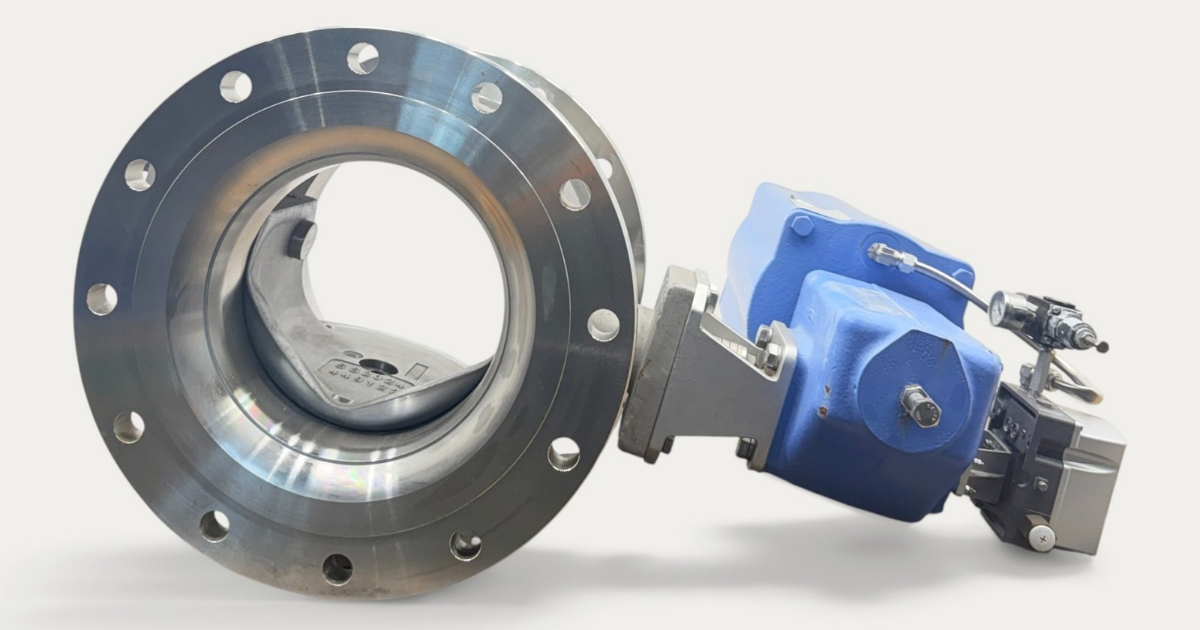
Industrial valve types fall into seven core families: gate, globe, ball, butterfly, check, plug, and control. Each one is built to do one job well: isolate flow, throttle flow, prevent backflow, or modulate a process variable. Picking the wrong family costs you in pressure drop, maintenance hours, or an unplanned shutdown. This guide breaks down how each type works, where it fits in a piping system, and how to narrow the field fast when you're speccing a replacement or a new install.
We field this question weekly from maintenance supervisors standing in front of a pipe spool with a failed valve and no time to guess twice. The short version: match the valve's function (isolate vs. throttle vs. check vs. control) to your process first, then filter by pressure class, material, and actuation. Everything below is organized to get you there.
What Are the Main Industrial Valve Types and Uses?
At the system level, valve types and uses break down into four functional categories: on/off isolation (gate, ball, plug, butterfly), throttling/flow regulation (globe, butterfly, some ball and plug designs), backflow prevention (check valves), and automated process control (control valves, often globe or ball bodies with actuators). Knowing which category your application needs eliminates most of the wrong choices before you ever look at a spec sheet.
| Valve Type | Primary Function | Typical Service | Pressure Drop When Open |
|---|---|---|---|
| Gate | Full isolation (on/off) | Water, steam, oil, slurry lines | Very low |
| Globe | Throttling | Steam, chemical feed, boiler lines | Moderate to high |
| Ball | Fast isolation, some throttling | Gas, air, water, corrosive media | Very low |
| Butterfly | Isolation and throttling in large lines | Water, air, low-pressure process lines | Low to moderate |
| Check | Backflow prevention | Pump discharge, compressor lines | Low (design dependent) |
| Plug | Isolation, abrasive/slurry service | Slurries, chemical lines | Low |
| Control | Automated process regulation | Temperature, pressure, flow loops | Engineered to loop |
Gate Valves: When Full Flow, Full Shutoff Matters
Gate valves use a flat or wedge-shaped gate that lifts straight out of the flow path. Fully open, they offer almost no restriction and almost no pressure drop. This is exactly why they're the default for main line isolation on water, steam, and oil services. They are not built for throttling; running a gate valve partially open causes vibration, gate chatter, and accelerated seat wear. If your application needs occasional full-open/full-close duty with minimal pressure loss, gate is usually the right call. If it needs to sit in a partially open position regulating flow day in and day out, look at globe or control valves instead.
Globe Valves: Built for Throttling, Not Speed
Globe valves route flow through an S-shaped internal path past a disc that seats against a ring. That geometry creates more pressure drop than a gate valve even fully open, but it gives you stable, repeatable throttling across a wide range of positions. This is why globe valves show up constantly in steam systems, boiler feed lines, and chemical dosing skids where precise flow control matters more than minimizing drop. They're slower to operate than a quarter-turn valve and not the right pick for simple isolation duty where a gate or ball valve would do the job with less pressure loss.
Ball Valves: Fast, Tight, and Low-Maintenance
A ball valve uses a bored sphere that rotates 90 degrees between full open and full closed. That quarter-turn action makes them fast to operate manually or automate, and the spherical seat design gives a tight shutoff that holds up well in gas, air, and corrosive chemical service. Standard full-port ball valves aren't ideal for fine throttling, the flow characteristic near closed is non-linear and erosion can occur on the seat, but characterized or V-port ball valves handle moderate throttling duty well. For straightforward isolation where speed and tight shutoff both matter, ball valves are usually the most maintenance-friendly option on the table.
Butterfly Valves: Compact Isolation for Large-Diameter Lines
Butterfly valves use a rotating disc mounted on a shaft through the center of the flow path. They're lighter, shorter face-to-face, and less expensive than gate or ball valves in larger sizes, which makes them the common choice for big-diameter water, air, and low-pressure process lines where space and weight are real constraints. Resilient-seated butterfly valves handle moderate pressures well; high-performance double and triple-offset designs extend that range for tougher services. They're not typically the first choice for high-pressure steam or where bubble-tight shutoff at high differential pressure is critical, that's globe or gate territory, or a high-performance butterfly design specifically rated for it.
Check Valves: One-Way Protection for Pumps and Compressors
Check valves allow flow in one direction and close automatically against reverse flow no actuator, no manual operation, just differential pressure doing the work. They're essential on pump discharge lines and compressor systems to prevent backflow that would otherwise drain a line backward, cause water hammer, or let a pump spin in reverse when it shuts off. Swing check, lift check, and wafer-style check valves each handle this differently: swing checks are common in larger horizontal lines, lift checks handle higher-pressure service, and wafer checks save space in tight piping runs. Selecting the wrong style for your flow velocity and orientation is one of the most common sources of check valve slam and premature failure we see in the field.
Plug Valves: Simple, Rugged Isolation for Dirty Service
Plug valves use a cylindrical or tapered plug with a bored passage that rotates to open or block flow. The design is simple and rugged, which is exactly why plug valves show up in slurry lines, abrasive media, and chemical process piping where a more complex valve geometry would trap solids or wear out fast. Lubricated plug valves reduce torque and extend seat life in heavier-duty applications. They're less common in fine throttling duty, but for straightforward on/off isolation in dirty or abrasive service, a plug valve often outlasts more delicate designs.
Control Valves: Where the Process Does the Deciding
Control valves aren't a single body style, they're a function. Most are globe or ball bodies paired with a pneumatic, electric, or hydraulic actuator and positioner, continuously adjusting position in response to a process signal to hold temperature, pressure, flow, or level at a setpoint. Globe-bodied control valves dominate where precise, linear control is critical; ball and butterfly control valves show up where faster response or larger line sizes matter more than fine resolution. Sizing a control valve correctly means matching the trim characteristic (linear, equal-percentage, quick-opening) to how the process actually responds, get that wrong and you end up with a loop that hunts or never settles.
How Do You Select the Right Valve Type?
Selection logic, in the order we actually use it on a shop floor:
- Function first. Isolate, throttle, prevent backflow, or control a process variable, this alone eliminates most wrong candidates.
- Pressure class and temperature. Match ANSI/ASME class rating and body material to the line's design pressure and temperature, not just normal operating conditions.
- Media compatibility. Corrosive, abrasive, or slurry service narrows body and trim material fast, cast iron, bronze, carbon steel, and stainless all behave differently.
- Actuation needs. Manual, pneumatic, electric, or hydraulic, driven by how fast the valve needs to respond and whether it's tied into a control loop.
- Space and orientation constraints. Face-to-face dimensions and installation orientation can rule out gate or globe in favor of a more compact butterfly or ball design.
Pressure class deserves its own flag: a valve rated for the wrong ANSI class isn't a "close enough" substitute—it's a liability sitting in your piping system waiting for the day the line sees peak pressure.
Gate vs. Globe vs. Ball vs. Butterfly: Quick Comparison
| Criteria | Gate | Globe | Ball | Butterfly |
|---|---|---|---|---|
| Best for | Full isolation | Throttling | Fast isolation | Large-line isolation |
| Operation speed | Slow (multi-turn) | Slow (multi-turn) | Fast (quarter-turn) | Fast (quarter-turn) |
| Pressure drop (open) | Very low | Moderate-high | Very low | Low-moderate |
| Space/weight | Larger | Larger | Compact | Compact, lightweight |
Sourcing and Lead Time: What Actually Matters on the Floor
Once you've narrowed the type, the real-world decision often comes down to what's available and how fast it can be in your hands. New valves give you full documentation and warranty coverage but can carry longer lead times depending on size and material. Rebuilt units that are restored to spec and tested close the gap on cost without sacrificing reliability when the rebuild shop does the job right. Inspected, pre-owned valves fill in for lower-criticality service or when a plant needs something on hand immediately rather than weeks out. Whichever route fits your downtime window, check current valve inventory before committing to a long lead time on a new order, and if you don't see the exact size or class you need listed, request a quote and we'll track it down. Done With Pride means getting you the right valve, not just any valve, on a timeline that actually works for your shutdown.
What is the main difference between a gate valve and a globe valve?
Gate valves are built for full on/off isolation with almost no pressure drop when open, while globe valves are designed for throttling and hold up better to repeated partial-open positioning. Using a gate valve for throttling duty causes chatter and premature seat wear.
When should I use a ball valve instead of a butterfly valve?
Ball valves offer tighter shutoff and better corrosion resistance in smaller to mid-size lines, while butterfly valves are more practical in large-diameter, lower-pressure lines where weight and space matter. If bubble-tight shutoff is critical, ball usually wins; if line size and cost are the drivers, butterfly often does.
Why do check valves fail prematurely?
Most premature check valve failures trace back to selecting the wrong style—swing, lift, or wafer—for the actual flow velocity and pipe orientation, which causes valve slam and seat damage over time. Matching check valve type to actual flow conditions, not just line size, prevents most of this.
Is a rebuilt valve as reliable as a new one?
A valve that has been restored to spec and tested can perform reliably in many services, particularly where lead time or budget rules out new. For critical high-pressure or high-temperature service, new is still the safer default due to full documentation and warranty coverage.
How do I know what pressure class valve I need?
Pressure class must match the piping system's design pressure and temperature rating, not just normal operating conditions, since valves see transient pressure spikes during startup, shutdown, and upset conditions. Check the line's ANSI/ASME class designation against the valve's rated class before ordering.


