

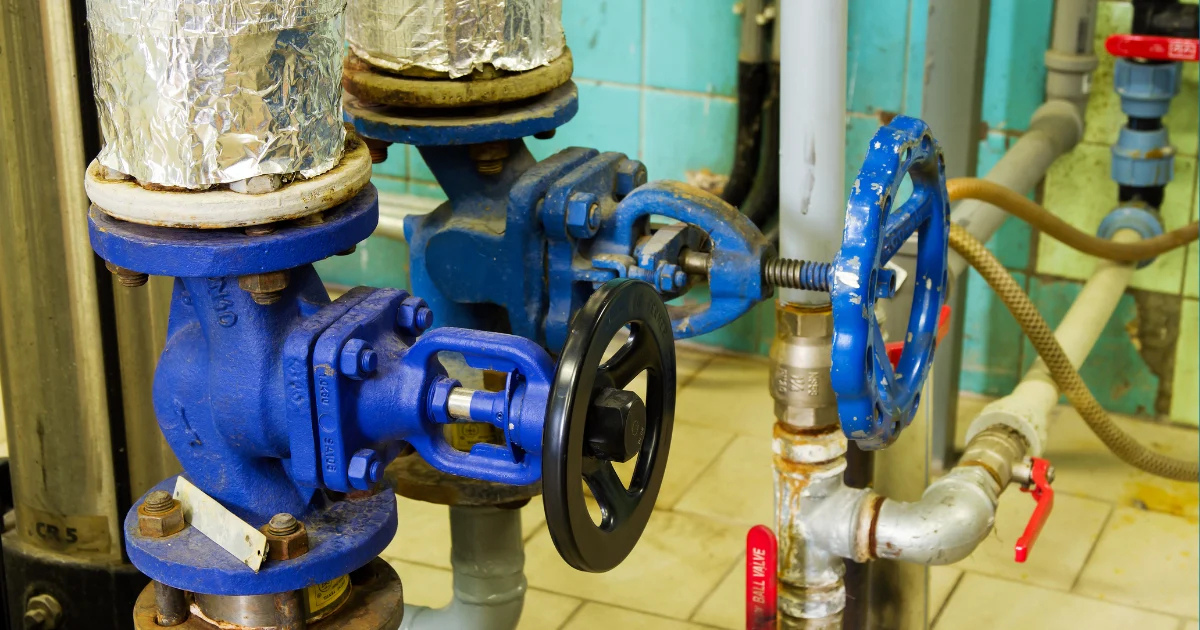
Not all valves do the same job, even when they're controlling the same pipeline. Some are built for a clean, fast shut-off. Others are designed for precise flow control, or for handling thick slurries that would jam a standard valve entirely. Choosing the wrong valve type can lead to poor flow control, premature wear, or a valve that simply can't handle what's running through it.
This guide breaks down five common industrial valve types, how they work, and when each one is the right call.
What Is a Ball Valve?
A ball valve uses a hollow, perforated ball to control flow. When the ball's bore is aligned with the pipe, flow passes through; a quarter turn rotates the bore out of alignment and shuts flow off completely.
Best for:
- Fast, reliable on/off shut-off
- Applications requiring a tight seal with minimal leakage
- Frequent open/close cycles
Limitations:
- Not designed for precise flow throttling; ball valves are built for on/off control, not fine-tuned regulation
- Can be less ideal for slurries or fluids with heavy particulate, which can damage the seal
What Is a Butterfly Valve?
A butterfly valve uses a rotating disc mounted on a shaft. Turning the shaft rotates the disc within the flow path, allowing it to open, close, or partially throttle flow.
Best for:
- Large-diameter pipelines where a compact, lightweight valve is needed
- Applications requiring moderate throttling control
- Lower-cost installations compared to gate or globe valves of the same size
Limitations:
- Less precise shut-off than a ball valve, since the disc remains in the flow path even when closed
- Not typically suited for high-pressure applications
What Is a Gate Valve?
A gate valve uses a flat or wedge-shaped gate that lifts vertically out of the flow path to open, or lowers into it to close. It's designed for full, unobstructed flow when open.
Best for:
- On/off applications where minimal pressure drop is critical
- Applications where the valve stays fully open or fully closed most of the time
- Larger pipelines carrying clean or moderately clean fluids
Limitations:
- Slow to operate compared to a quarter-turn ball or butterfly valve
- Not designed for throttling; partial opening can cause vibration and premature wear
What Is a Knife Gate Valve?
A knife gate valve is a specialized version of the gate valve, using a sharp-edged gate designed to cut through thick or fibrous material as it closes.
Best for:
- Slurries, sludges, and fluids with heavy solids or fibrous content
- Wastewater treatment, pulp and paper, and mining applications
- Applications where a standard gate valve would jam or fail to seal
Limitations:
- Not designed for high-pressure service the way a standard gate valve is
- Primarily suited to on/off control rather than throttling
What Is a Globe Valve?
A globe valve uses a movable disc-type element and a stationary ring seat, with flow passing through in a Z-shaped pattern. That flow path design makes globe valves especially well-suited to precise throttling.
Best for:
- Applications requiring accurate flow regulation, not just on/off control
- Frequent adjustment or throttling needs
- Moderate pressure and temperature applications
Limitations:
- Higher pressure drop than gate or ball valves due to the Z-shaped flow path
- Generally more expensive than comparable gate or ball valves
Comparison Table
|
Valve Type |
Best For |
Flow ControlShut-Of |
Speed |
Pressure Drop |
|
Ball |
Fast, tight shut-off |
On/off only |
Fast (quarter-turn) |
Low |
|
Butterfly |
Large pipelines, moderate throttling |
Moderate throttling |
Fast (quarter-turn) |
Low–moderate |
|
Gate |
Full-flow on/off |
On/off only |
Slow |
Very low |
|
Knife Gate |
Slurries, fibrous or solids-heavy fluids |
On/off only |
Slow |
Low |
|
Globe |
Precise flow regulation |
Precise throttling |
Slow |
High |
How to Choose the Right Valve for Your Application
Ask these questions before selecting a valve:
- Do you need on/off control or precise throttling? Ball, gate, and knife gate valves excel at shut-off. Globe and butterfly valves handle throttling better.
- What's running through the line? Clean fluids work fine with most valve types, but slurries, sludges, or fibrous material call for a knife gate valve.
- How much pressure drop can you tolerate? Gate valves offer the lowest pressure drop when fully open; globe valves have the highest due to their flow path design.
- How often will the valve cycle? Frequent open/close cycles favor quarter-turn valves like ball and butterfly, which operate faster and see less wear over time than gate valves.
- What's your space and budget? Butterfly valves are typically more compact and cost-effective for large-diameter lines compared to gate or globe valves of the same size.
If you're not sure which valve type fits your application, our team can help match your specs to the right equipment before you buy.
Frequently Asked Questions
What's the difference between a ball valve and a butterfly valve? A ball valve uses a perforated ball to control flow and provides a tighter shut-off, making it ideal for on/off applications. A butterfly valve uses a rotating disc, is more compact and cost-effective for large pipelines, and can offer moderate throttling control that a ball valve isn't designed for.
When should I use a knife gate valve instead of a standard gate valve? Use a knife gate valve when the fluid contains solids, sludge, or fibrous material that would jam or damage a standard gate valve. The sharp-edged gate is designed to cut through that material as it closes.
Are globe valves good for shut-off applications? Globe valves can shut off flow, but they're not the most efficient choice for that purpose. Their Z-shaped flow path causes a higher pressure drop than a ball or gate valve, so they're better suited to applications requiring precise throttling rather than simple on/off control.
Which valve type is best for high-pressure applications? Gate valves are commonly used in high-pressure applications because of their low pressure drop and full-flow design when open. The right choice ultimately depends on the specific pressure rating and application, so checking manufacturer specs for your exact use case is recommended.
Can butterfly valves handle high-pressure systems? Standard butterfly valves are generally better suited to low- to moderate-pressure applications. For higher-pressure needs, a gate or ball valve is typically a better fit.
Looking for a specific valve type? Browse our full valve inventory or request a quote and our team will help match the right equipment to your application.


